


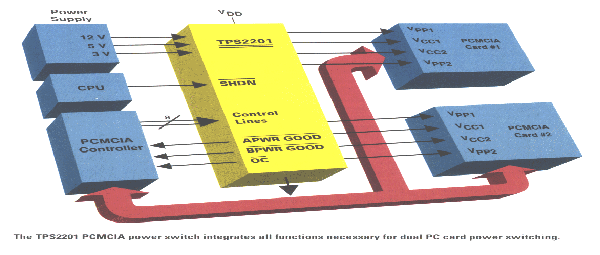
Texas Instruments introduces the first fully-integrated dual-slot PC Card power interface switch, the TPS2201IDF. Designed to be fully compliant with current PCMCIA standards and compatible with the most popular PCMCIA controllers, the TPS2201 provides a simple, complete solution for powering two PC cards in applications that include notebook computers, PDA's, scanners, and laboratory equipment. The TPS2201 integrates two complete sets of VCC (3-V, 5-V) and VPP switches and the required control logic into a single device. On-chip current limiting of each output and thermal protection eliminates the need for external fuses and simplifies designs even more.
To extend battery life in portable systems, the TPS2201 uses the 5-V VDD supply to generate gate voltages for the VCC switches. This allows the system's 12-V VPP supply to be disabled except for infrequent programming of flash memory cards. Low quiescent current-just 83 µA typical-saves even more power, and a micropower shutdown mode drops the supply current to just 1 µA (max).
The TPS2201 utilizes Low Voltage DMOS (LVDMOS) transistor switches to achieve maximum power transfer, even for demanding Type-III cards. The ultra-small LVDMOS geometries make it possible to integrate all the switches for powering two PC Cards onto a single die, while maintaining low on-resistance (160 m½ max for the 5-V switch). The result is a small form factor, single-chip solution for complete PC Card power management.
The TPS2201 is designed for use in mixed 3-V/5-V systems. Additional features-such as overcurrent fault reporting and VPP "power-good" indicators-make it even more appealing for new PCMCIA host designs. The entire dual-slot interface is self-contained in a single 30-pin surface mount (SSOP) package.
See article PCMCIA switch with P2C interface
Vol 10, Fall 1994