
Digital Signal Processors: High-Performance Specialists
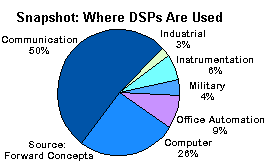
- TI is the world's leading DSP provider with more
than 20,000 customers worldwide and a 44.1 percent share* of the
DSP market.
- TI's DSP business grew 70 percent in 1994 and
is growing at an average annual rate of 40 percent, outpacing
the projected annual growth rate of the worldwide DSP market.
- Industry analyst Will Strauss predicts the DSP
chip market will grow to $9.1 billion in four years.
- Combining DSPs with other chips and software
to provide a total DSP solution to a product designer's specific
needs is a TI specialty. In fact, TI is the leading DSP solutions
provider. TI predicts the total available market for digital
signal processing solutions will reach an estimated $12.7 billion
by the year 2000.
- DSPs will have as great an impact on future products
as the microprocessor had the last 10 years. The speed, power
and cost effectiveness of the DSP are the reasons the chip is
being used in hundreds of consumer products, such as:
- wireless telephones hard disk drives
- PC games videoconferencing equipment
- anti-lock brakes modems
- digital set-top boxes
- digital telephone answering devices
- DSPs are up to10 times faster than the average
general purpose processor. TI's highest performing DSP is as
much as 50 times faster than the most powerful general purpose
processor. Handling two billion operations per second, this high-performance
DSP can process image, text and sound simultaneously, making multimedia
a reality on the desktop.
- DSPs process and accumulate numbers as they go,
creating a continuing flow of processing power for a chosen application.
For example, a robot without a DSP would have jerking motions,
but a robot using DSP technology would exhibit smooth, human-like
motions.
- A state of the art DSP can do multiplication
in 20 nanoseconds--the time it takes light to travel about 20
feet. DSPs work so fast, that when used in an active suspension
system in cars, the DSP senses when the wheel hits a bump and
adjusts the ride instantly, before a passenger even feels the
movement.
- Beginning with TI's commercialization of the
silicon transistor in 1954 and the invention of the integrated
circuit in 1958, TI technologies have been on the leading edge
of the digital revolution. In fact, TI pioneered the DSP market
in 1982.
- It is estimated that for every dollar of DSPs
sold, TI sells at least one more dollar worth of additional accessory
chips that comprise the rest of a digital signal processing solution.
As a result, digital signal processing solutions today accounts
for nearly 20 percent of TI's total SC business, and is expected
to be the largest share of this business by the turn of the century.
*Source: Forward Concepts - Revised 6/96

 Search the Semiconductor News Release Archives
(c) Copyright 1996 Texas Instruments Incorporated. All rights reserved.
Trademarks, Important Notice!