|
|
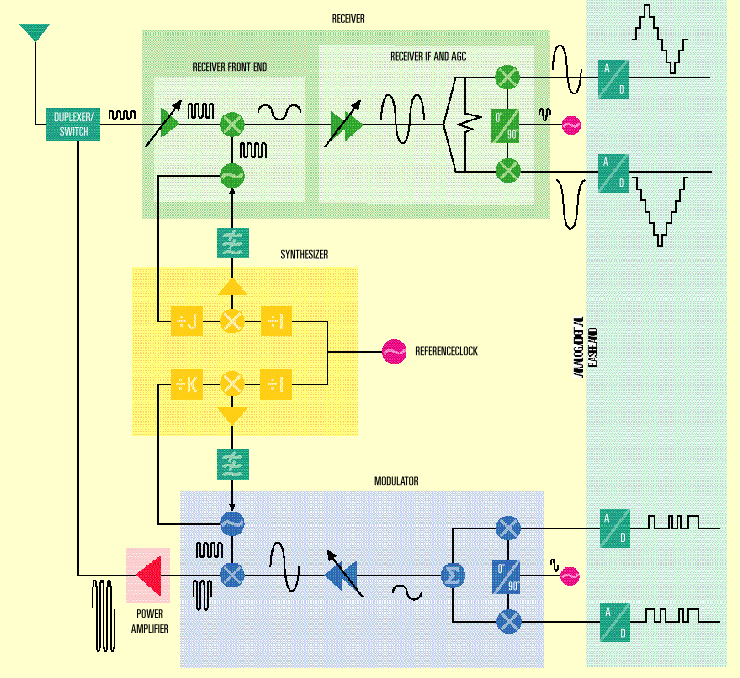 The RF section is what makes a phone wireless. It transmits and receives radio signals that link a cellular or PCS handset to the wireless network. These signals carry voice and control information for phone calls and are increasingly carrying data for other uses as well. In operation, the RF section receives an incoming high-frequency signal through the antenna, processes the signal through amplifiers, filters and mixers down to baseband frequency, then passes it along to the baseband section for further low-frequency analog and digital processing. This process is reversed for outgoing signals, where digitally-encoded signals of less than 20 KHz in bandwidth are modulated onto frequencies of 800-900 MHz for cellular and 1800-1900 MHz for PCS services, then amplified for transmission. These complex processes, requiring numerous intermediate steps, demand careful system design, frequency planning and functional partitioning. TI has the RF design expertise and advanced manufacturing processes needed to create the RF components required in today's exacting wireless market. |