|
Wireless Terms Digital Signal Processors Paging and Messaging Base Stations OEM requirements 'C6x Performance Handsets Digital Baseband ABB RF Power Management |
TMS320C6x DSPs: Enabling the future of Wireless Base StationsThe new TMS320C6x generation of Digital Signal Processors from Texas Instruments is designed to meet the high performance, low cost-per-channel, and power efficiency requirements of emerging wireless base stations. Offering ten times the processing power of previous DSPs, the 'C6x shifts the burden of product development from hardware to software, shortening design and product revision cycles for the full-featured base station systems of the future.
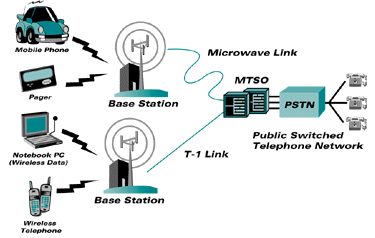
Wireless communications -- the overall system
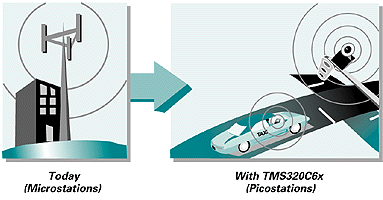
The shrinking wireless base stationsWireless telephones are continually shrinking, and so are the base stations that serve them. In the past, a base station required a small building for a system that could transmit to and receive from handsets several kilometers away. Today, more compact base stations are augmenting the existing wireless network with smaller cells. Both the original "macro" stations and the new "micro" stations offer wide-area coverage. However, microstations add the possibility of local-area coverage for Personal Communication System (PCS) and cordless instruments in large plants, corporate offices and pedestrian malls. Microstations will also support local-area instruments that can transfer or hand off calls to wide-area PCS/cellular networks. Figure 1 shows the pivotal role that base stations play in wireless communications systems.The end of the decade will see the introduction of even smaller base stations that support cells only a few hundred meters in diameter. These "pico" stations will continue the trend of bringing to office complexes and residential neighborhoods local-area wireless services that can be handed off to wide-area networks. An important technical advantage that small cells bring is a requirement for much lower transmission power in both base stations and handsets. At the same time, picostations will have to hand off calls from station to station very quickly, especially calls from users in vehicles. These handoffs will demand much greater processing speed within the base station systems.
TMS320C6x -- Enabling the future of wireless base stations |