


 DSP solutions from third parties SASL adds V.34 data modem to software line Postal sorting application uses LSI Linescan Module Active noise control silences aircraft cabins IAT bases high-definition video on 'C80 Aircraft starter/generator control uses Pentek boards Open DSP telephony platform arrives Affordable computer telephony for small businesses Portescap provides DSP motion control solution |
Portescap provides DSP motion control solution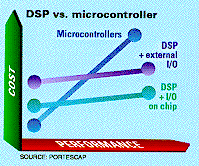
A high-level graphical design tool that can assist in all stages of motion system design from motor selection to code implementation is offered by Portescap. The S.O.A.P. development platform allows designers to describe a complete model of various motors and their loads, then predict dynamic motor behavior with different predefined digital control algorithms for comparison of potential solutions. A hardware experimental platform supports direct implementation of the real-time system and, with additional features such as scope functions, permits a quick analysis of dynamic behavior. A starter kit DSK TMS320C240, including a DSP board and a small brushless motor, in conjunction with graphical programmable software, permits the designer to illustrate the particular features for motor control embedded in the 'C240. Code libraries will also be available for the direct implementation of digital motor control algorithms in target applications. DSP calculation power, together with optimized hardware for digital motor control, offers new performance and cost-effective solutions for industrial driver controls. In particular, the 'C240 DSP, with its dedicated event manager, specific interfaces for digital encoders and digital current control, outperforms the classical microcontroller solution. Elaborate control algorithms supporting a large variety of dynamic conditions can be implemented with a reduced number of external electronic components. Moreover, sensorless control schemes help cut costs by limiting the number of sensors needed. Eventually the controller and the power stage can be directly embedded in the motor, providing a full flexible functional unit with highly reduced design-in time. |