



In This Issue Special Focus on Logic
DSP Solutions
Wireless
Memory
Mixed-Signal and Analog
Business News
|
64M SDRAM at PC100 specTI's new 64-megabit (64M) synchronous DRAMs (SDRAMs), which comply with Intel's PC100 specification, offer increased performance for file servers, workstations and high-volume desktop personal computers without increased system size. PC100 is the new high-speed standard for synchronous memory interface on computer motherboards. As the market for PC100-compliant SDRAMs grows, TI will continue to develop other higher-density technologies that address customer needs for higher system performance. TI's PC100 64M SDRAMs will be available in x4, x8 and x16 device configurations. Part numbers are TMS664414, TMS664814 and TMS664164, respectively. Production samples are available now with the production RAMP scheduled for within the next few months. The devices will be available in 400-mil, 54-pin thin small outline package (TSOP) and 168-pin DIMMs. Both are JEDEC-standard. 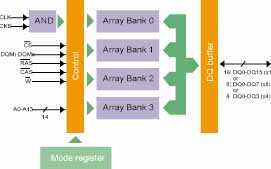 For complete information, order: Synchronous DRAM Brochure (SMOB002). See Related Product Information
|